
Public Policy Update: July 1 Changes, Housing & Transportation Action in Congress
June 19, 2026 | Public Policy
Iowa Laws Taking Effect July 1: Key Updates for Employers and the Business Community
A series of new Iowa laws take effect July 1, coinciding with the start of the state’s 2026 fiscal year and the rollout of legislation passed during this year’s session. Gov. Kim Reynolds signed roughly 200 bills into law, with many now moving into implementation. While a number of the changes focus on health care, education, and other state policy areas, several have implications for employers, workforce development, and the broader business climate.
Workforce, Education, and Hiring Practices
One of the more notable changes for employers is HF 2337, which makes it a fraudulent practice for an individual to falsely represent academic credentials or degrees to obtain employment. The law is intended to strengthen hiring integrity and may prompt employers to review credential verification practices.
HF 2711 updates requirements for education and law enforcement entities, including eliminating affirmative action requirements in certain state education and training settings and removing mandated racial and cultural awareness training for law enforcement. The bill also reinforces de-escalation training requirements. While primarily targeted at public institutions, these changes may influence workforce training standards and procurement expectations for employers who contract with or partner with public entities.
Education Funding and Workforce Pipeline Impacts
SF 2201 sets the state Supplemental State Aid (SSA) growth rate at 2% for the upcoming school year and includes additional funding for school operations, paraeducator pay, and property tax relief. While not a direct business regulation, these funding decisions shape long-term education system capacity and the workforce pipeline employers rely on, particularly in high-demand fields such as health care, manufacturing, and skilled trades.
Legal and Compliance Environment
HF 2617 introduces new requirements for towing and vehicle storage practices, including expanded notification timelines, credit card payment acceptance, and itemized fee disclosures. Employers with fleet vehicles or operations dependent on transportation logistics may see indirect impacts from these changes.
Housing, Local Costs, and Government Operations
SF 2201 and related property tax provisions continue adjustments to school funding and property tax relief mechanisms. While these changes are primarily local government-focused, they contribute to ongoing shifts in property tax dynamics that can influence operating costs, workforce affordability, and community competitiveness for employers.
The Economic Alliance will continue monitoring implementation guidance as agencies roll out these changes and will provide additional updates on implications for employers across the region.
Strengthening Iowa’s Energy Competitiveness
Another measure signed into law, HF 2757, creates a sales and use tax exemption for materials, equipment, and services used to construct, expand, or restart nuclear electric generation facilities in Iowa. The legislation is designed in part to support the potential restart of the Duane Arnold Energy Center near Palo—previously Iowa’s only nuclear facility, which ceased operations in 2020.
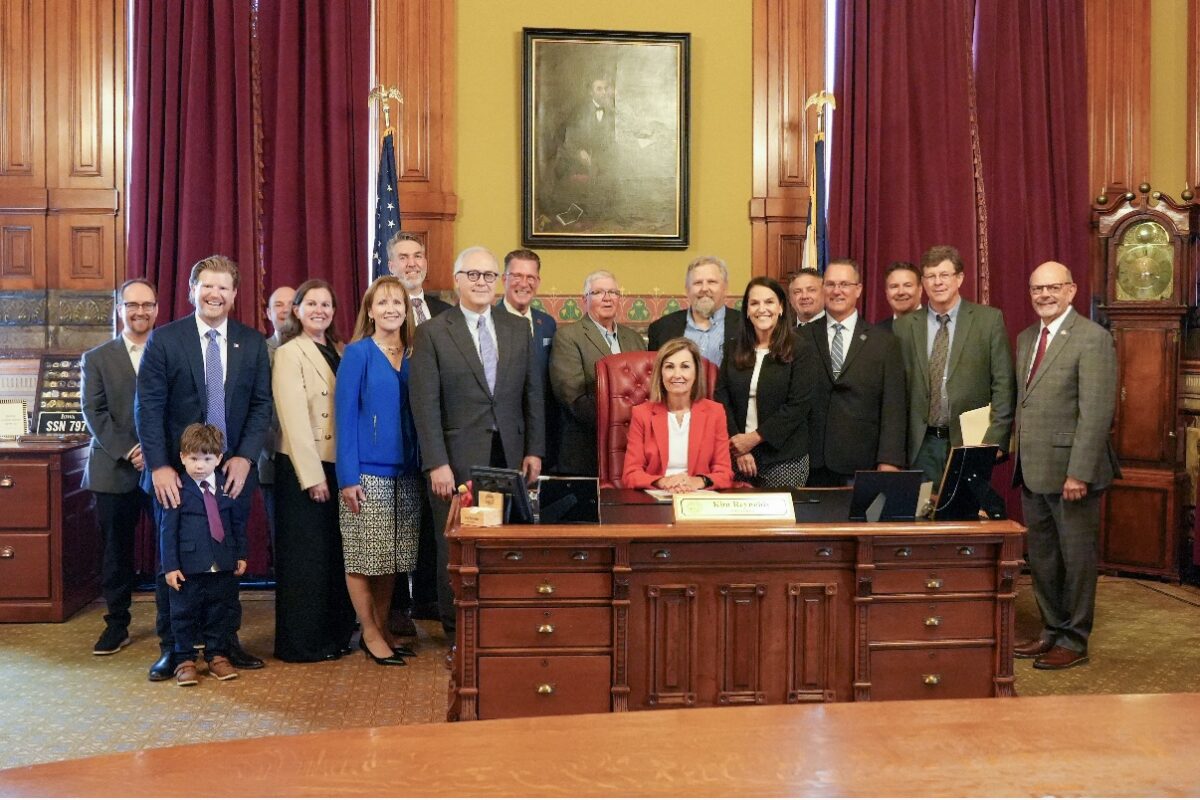
Under the new law, qualifying nuclear projects may receive tax exemptions on costs tied to site preparation, construction, expansion, repairs, and restart activities. The exemption begins January 1, 2026, and continues until a facility resumes commercial operation.
The legislation also establishes a Nuclear Energy Workforce Fund under the Iowa Board of Regents to support training programs and equipment at Iowa’s public universities. Participating facilities will contribute annually based on generating capacity as a condition of receiving the tax benefit.
Supporters say the measure positions Iowa to respond to growing electricity demand driven by economic expansion, data centers, and artificial intelligence, while also strengthening workforce development and diversifying the state’s energy portfolio. The bill received broad bipartisan support in both chambers.
Housing Update: Congress Advances Major Housing Affordability Package
House and Senate leaders have reached bipartisan agreement on the 21st Century ROAD to Housing Act, a broad housing package designed to increase supply, reduce development barriers, and expand affordable housing options nationwide.
The Economic Alliance has identified housing as a key priority through The Collective Voice to support policies that expand housing availability and remove barriers to development. During our 2026 DC Fly-in, we urged federal officials to support this legislation. This week, the Senate advanced the bill with strong bipartisan backing, making it one of the most significant housing policy efforts Congress has considered in recent years. The package includes measures to encourage new housing development, modernize federal housing programs, and expand opportunities for manufactured housing.
For employers, the legislation reflects growing recognition in Washington that housing affordability is not only a community issue, but also a workforce and economic competitiveness issue. Across Iowa and the nation, businesses continue to cite housing availability as a challenge when recruiting and retaining employees.
A shortage of attainable housing limits workforce growth and economic development. Policymakers in both parties increasingly see housing supply as essential to long-term economic competitiveness.
Watch for additional updates as the legislation advances toward final passage.
Transportation Update: Reauthorization Bill Moves Forward Ahead of Funding Deadline Pressure
The House Transportation & Infrastructure Committee advanced the BUILD America 250 Act (H.R. 8870). a five-year, $580 billion successor to the Infrastructure Investment and Jobs Act, on a strong bipartisan 62–2 vote. While the bill establishes the next major surface transportation framework ahead of the IIJA’s Sept. 30, 2026 expiration, ideological divisions over transit funding and climate policy, along with a compressed election-year calendar, make a short-term extension likely.
We’re engaged through the U.S. Chamber of Commerce’s Keep America Moving initiative, advocating for safety, reliable funding, permitting reform, and a stabilized Highway Trust Fund.
Key shifts in the framework include: a revised funding mix ($474B Highway Trust Fund / $106B general fund) with increased highway investment and reduced transit allocations; new EV user fees to support long-term roadway funding; aggressive permitting reforms to accelerate project delivery; and new freight and autonomous vehicle standards, including pilot programs for heavier interstate truck weights up to 91,000 pounds.
Watch for additional updates as the legislation advances through the legislative process.